RPC Finder
Autonomous crawler that discovers, benchmarks, and ranks RPC peers across Cosmos, EVM, Solana, and NEAR so your infrastructure always connects to healthy nodes.
What it does
RPC Finder acts as the discovery layer for our routing stack. It joins networks as a public peer, inspects every inbound/outbound connection, and keeps a curated list of premium RPCs ready for production use.
Results feed directly into RPC Traffic Gateway or any validator automation pipeline, eliminating guesswork when sourcing endpoints.

Features
How Finder keeps peers reliable
Continuous network scanning
Finder crawls Cosmos, Ethereum, Solana, NEAR, and other networks around the clock. Peer lists stay fresh without manual upkeep.
Peer quality scoring
Incoming and outgoing connections are benchmarked for latency, block height, and error rate. Weak nodes are downgraded automatically.
Block validation checks
The service replays block headers to confirm sync health, filtering out providers that stall or fall behind.
Routing recommendations
Outputs ready-to-use peer inventories that can be fed into RPC Traffic Gateway, validators, or dApp backends.
Alerting hooks
Optional Telegram/Discord hooks notify operators when network peer quality deteriorates or new premium nodes appear.
Multi-protocol support
Supports Cosmos SDK, EVM, Solana, NEAR, and upcoming L2s. Data is normalized so ops teams can compare chains.
Telemetry & reports
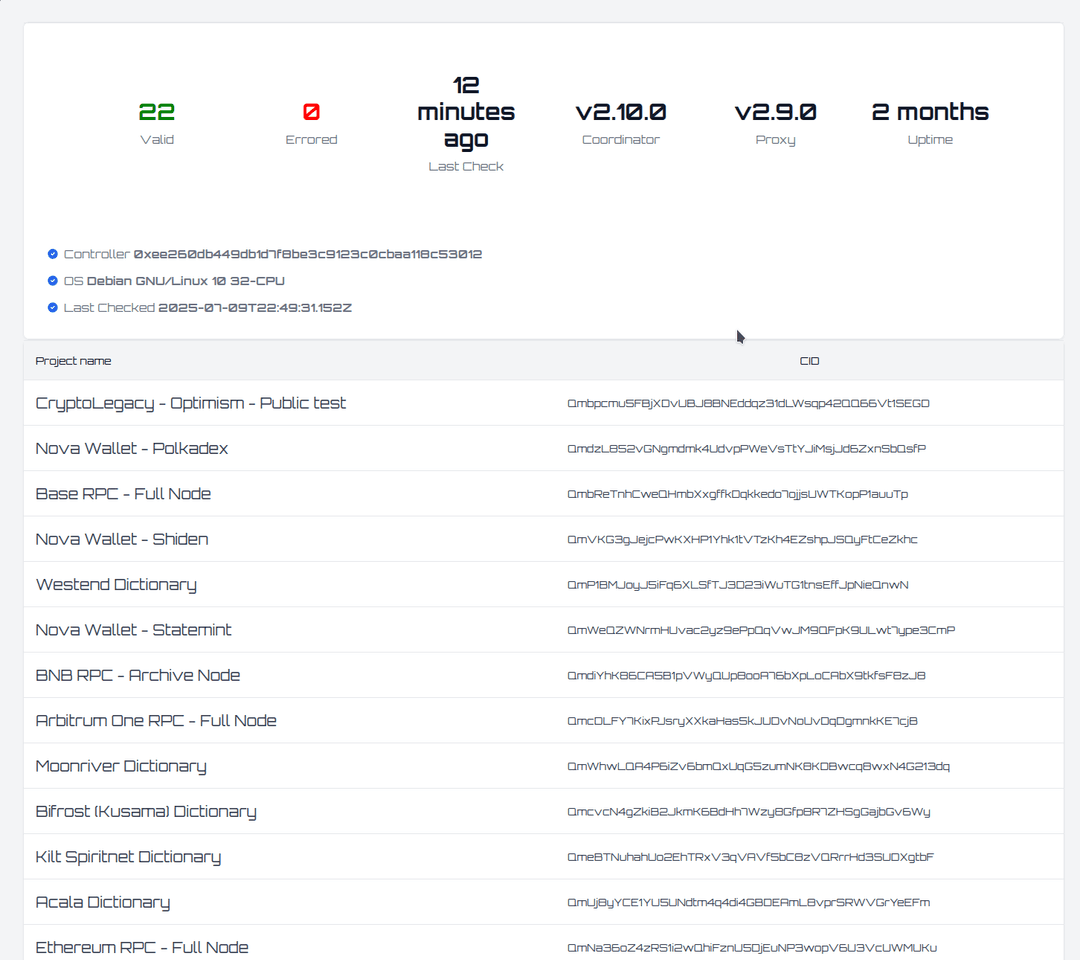
Finder produces dashboards and Telegram/Discord digests with latency charts, churn alerts, and new node candidates. Operators can subscribe per network and receive actionable context before incidents escalate.
Why teams adopt RPC Finder
Without a discovery layer, most operators hardcode a handful of peers and hope they stay online. RPC Finder continuously refreshes that inventory, validates every node, and alerts your team before client performance degrades.
Whether you operate validators, host dApps, or run data aggregators, Finder keeps your upstream RPCs steady so higher layers can focus on actual product work.